
Scroll through almost any social media feed and promotional content appears within seconds — contests, bonus offers, exclusive deals, limited-time promotions. Some of it is genuine. A significant portion is not. The challenge for users is that the gap between a legitimate offer and a convincingly designed fake has narrowed considerably, and the consequences of clicking the wrong one range from inbox spam to financial loss.
Understanding how unreliable offers behave on social media — and what distinguishes them from legitimate ones — is now a practical skill rather than an optional precaution.
The Scale of the Problem
The numbers are not reassuring. According to data published by the Federal Trade Commission, reported losses to scams that originated on social media are now eight times higher than they were in 2025 compared to 2020. In 2025 alone, more than 90% of social network users reported encountering spam in the form of fake links, promotional messages, or bot-driven comment activity.
Bot fraud on social platforms has accelerated sharply. North American platforms saw bot fraud surge 101% year-over-year in 2024, with peaks of 234% in some quarters compared to 2023 baselines. A 2024 study found that all eight major social platforms tested failed to detect advanced AI-generated bot accounts during experimental conditions — meaning automated accounts promoting fake offers are increasingly difficult for platforms to catch before users encounter them.
Entertainment-related promotions — gaming offers, streaming deals, bonus campaigns from digital platforms — are among the most commonly spoofed categories. The appeal is obvious: a time-limited bonus or exclusive access claim creates urgency, and urgency reduces the time users spend evaluating whether an offer is real.
What Unreliable Offers Look Like in Practice
Fake promotional content on social media follows recognisable patterns. Knowing those patterns makes them considerably easier to identify before engaging.
Accounts with no traceable history are a consistent signal. Spam and scam accounts are frequently created recently, have minimal post history, and show follower counts that do not align with their apparent reach. An account claiming to represent a well-known entertainment platform but created three weeks ago, with 47 followers and no profile history, is almost certainly not legitimate.
Pressure language around urgency and exclusivity appears in nearly every fake promotion. Phrases like “only 24 hours left,” “limited to the first 100 users,” or “exclusive access ends tonight” are designed to bypass rational evaluation. Legitimate platforms do run time-limited promotions, but they typically do so through official channels with verifiable links — not through unsolicited DMs or comment threads.
Links that do not match the domain they claim to represent are one of the most reliable red flags. A promotion claiming to be from a specific platform but linking to a domain with a slight variation in spelling, a different top-level domain, or a URL shortener that conceals the destination deserves immediate suspicion. Hovering over a link before clicking it reveals the actual destination on most browsers.
Requests for personal information as a condition of receiving an offer — email addresses, phone numbers, payment details, or account credentials — are not standard practice for legitimate entertainment promotions. Any offer that requires this kind of information before delivering what it promises is extracting value, not providing it.
How to Evaluate an Entertainment Offer Before Engaging
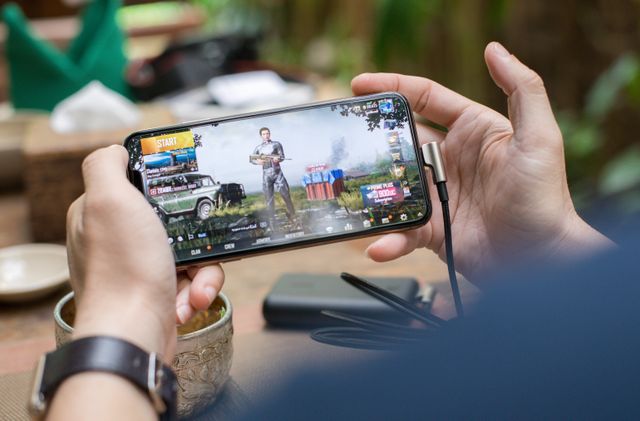
When a promotion appears worth checking, the evaluation process takes less than two minutes and eliminates the majority of fakes.
First, navigate directly to the official website of the platform making the claimed offer — by typing the address into a browser, not by following the link in the promotion. If the offer is real, it will appear there. If it does not, the link in the promotion is not going where it claims.
Second, check the account posting the promotion against the verified presence of the brand. Most platforms with genuine social media operations have verified accounts with consistent posting history, a reasonable follower base relative to their size, and links back to official properties.
Third, look at how the offer is framed. Reputable platforms that run bonus or promotional campaigns — including resources like https://bonus-jaeger.de, which aggregates and evaluates digital entertainment offers with clear source attribution and detailed conditions — present their information with transparency about terms, eligibility, and how to claim. The absence of that detail in a social media promotion is a meaningful signal.
The FTC’s guidance on recognising social media scams outlines the most common patterns and what to do when a scam is encountered — including how to report it in a way that contributes to enforcement action.
When to Walk Away
Some offers are not worth the effort of evaluating. Any promotion that arrives unsolicited in a direct message, claims to be exclusive to a specific user without explanation, requests credentials or payment information upfront, or links to a destination that cannot be independently verified falls into this category.
The asymmetry is worth keeping in mind: the downside of ignoring a legitimate promotion is missing a deal. The downside of engaging with a fake one is potentially losing account access, personal data, or money. The calculation favours scepticism.